


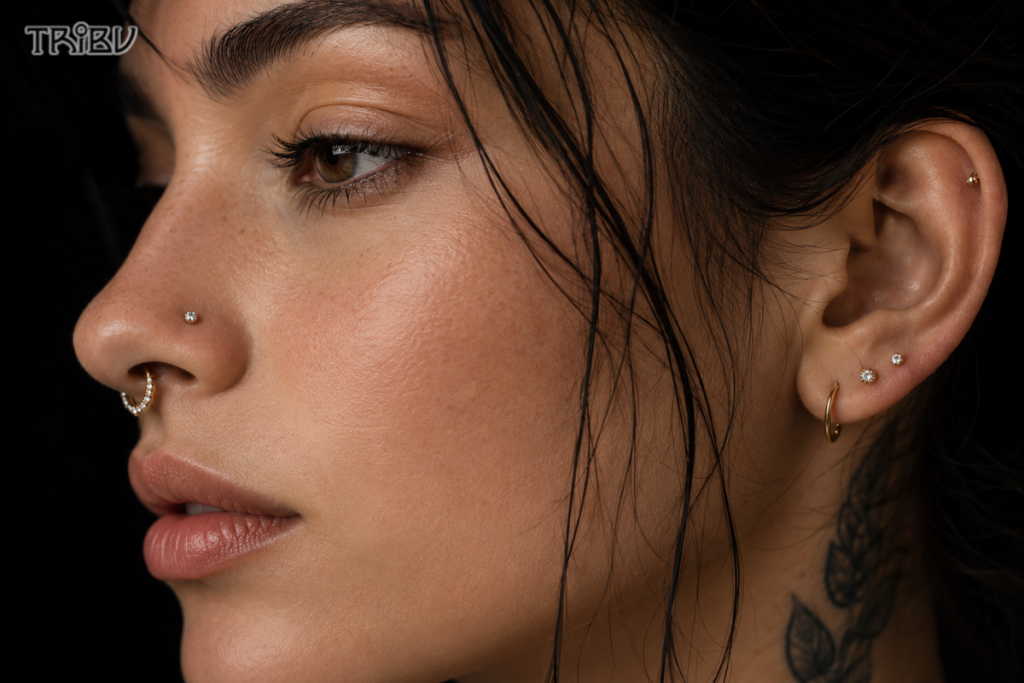
When you decide to modify your body, the choice of location is just as significant as the jewelry itself. While common lobe and helix options remain popular, selecting unique piercing placements allows you to express your individual identity in a more subtle, personal manner. Choosing an unexpected location can transform how your jewelry interacts with your natural anatomy, offering a quiet statement rather than a loud declaration.
At Tribu Piercings, we believe that every modification should reflect your personal story and heritage. Our approach focuses on safety, transparent procedures, and unhurried guidance to help you find the perfect addition to your collection. Whether you are a first-time collector or looking to expand your current collection, looking beyond the standard options can reveal a variety of beautiful, underappreciated possibilities.
Key Takeaways
- Unique placements offer a personalized way to express individual style.
- Proper anatomical assessment by a professional is necessary for successful healing.
- Healing times and aftercare vary significantly between ear and body locations.
- High-quality jewelry materials prevent complications during the recovery process.
Why Choose Uncommon Body Piercings?
Selecting uncommon body piercings offers a distinct way to stand out without relying on large or flashy jewelry. Many people choose these locations because they fit beautifully into the natural curves of the body, offering a balanced aesthetic that feels integrated rather than added on.
Here are several reasons why these placements are gaining appreciation:
- Subtlety: Many of these locations are easily concealed for professional environments or formal occasions.
- Anatomical Harmony: They work with your specific ear folds or body lines, making each placement entirely personal.
- Conversation Starters: Because they are seen less frequently, they often spark interest and appreciation from other jewelry enthusiasts.
- Cultural and Personal Meaning: Choosing a less common path can symbolize a personal milestone or a deeper connection to body modification history.
By stepping away from standard selections, you allow your body jewelry to become a true extension of your physical form, highlighting areas that are often ignored.
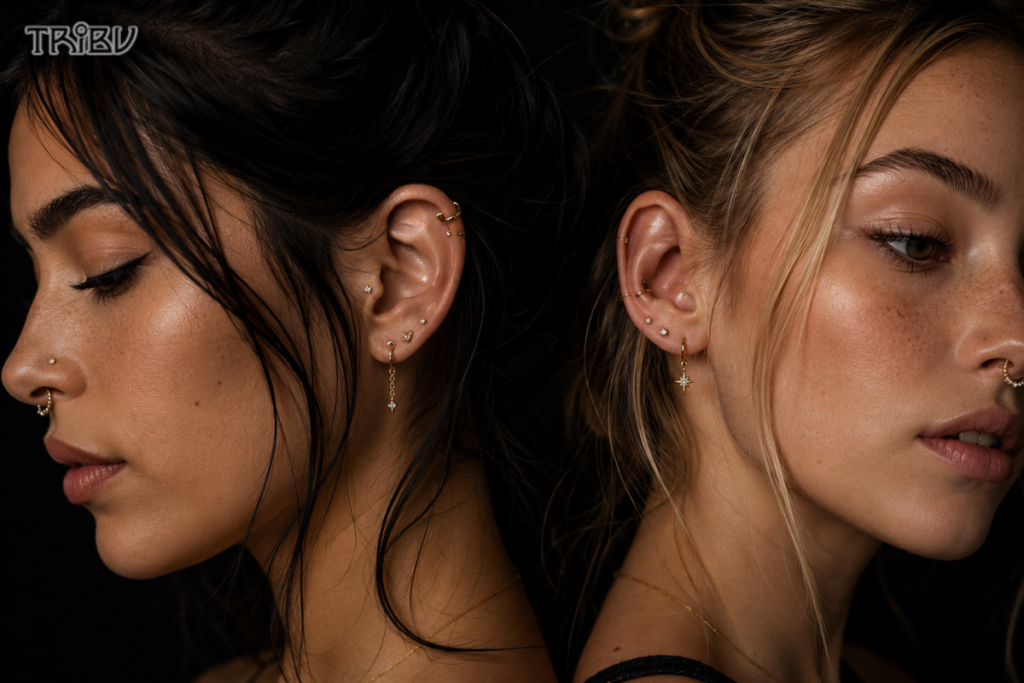
Underrated Ear Piercings to Consider
The ear offers a complex canvas of cartilage and tissue. While the tragus and daith have received significant attention in recent years, several other areas remain highly underappreciated.
The Anti-Tragus
Located directly opposite the tragus, the anti-tragus is the small fold of cartilage just above your earlobe. This placement is ideal for those who want a modern look that remains relatively rare.
- Aesthetic Appeal: It frames the lower portion of the ear beautifully, acting as a bridge between lobe piercings and upper cartilage piercings.
- Jewelry Options: Works exceptionally well with small curved barbells, delicate hoops, or micro-studs.
- Anatomy Requirement: Requires a sufficiently defined ridge of cartilage to hold the jewelry safely. If this ridge is flat, your piercer may advise against it to prevent migration.
The Snug (Anti-Helix)
The snug runs through the inner ridge of the ear cartilage, sitting parallel to the outer rim. It is a striking choice that draws attention to the mid-ear area.
- Aesthetic Appeal: It creates a visible double-point effect on the front and back of the inner ridge, offering a bold, geometric look.
- Jewelry Options: Typically styled with a curved barbell to accommodate the natural curve of the cartilage.
- Anatomy Requirement: This is a highly anatomy-dependent placement; the ridge must be prominent enough to pierce safely without excessive pressure on the tissue.
The Forward Helix
While the standard helix is incredibly common, the forward helix, located on the front rim of the ear, directly above the tragus, is often overlooked.
- Aesthetic Appeal: It offers a clean, framing effect for the upper face, drawing attention to your eyes and cheekbones.
- Jewelry Options: Perfect for tiny studs, and can even be grouped into double or triple placements if space allows.
- Anatomy Requirement: Needs a flat, accessible curve of tissue at the front of the ear where the cartilage joins the face.
The Conch (Internal and External)
The conch is the spacious cup-like area of the ear. While some are familiar with it, many do not realize how versatile it can be when positioned uniquely.
- Aesthetic Appeal: An internal conch sits snugly in the center, while an external conch can be wrapped with a large hoop for a bold look.
- Jewelry Options: Labret studs with ornamental ends, or large-diameter continuous rings once fully healed.
- Anatomy Requirement: Generally accommodating for most ear shapes, making it a highly reliable option for those with complex ear structures.
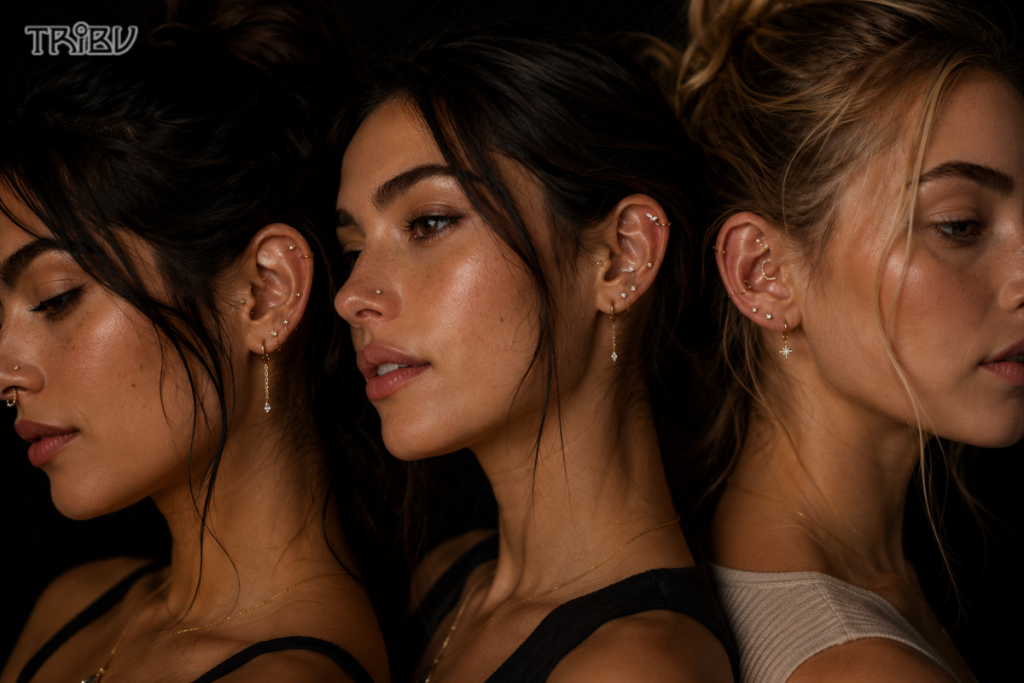
Underrated Body Placements with Subtle Appeal
If you are looking beyond the ears, the body offers several elegant options that remain hidden from daily view unless you choose to show them. These locations provide a highly personal form of self-expression.
The Horizontal Lip (Ashley or Jestrum)
While standard labret or side lip options are common, the Ashley and Jestrum offer a distinct alternative.
- The Ashley: This sits directly in the center of the lower lip, exiting inside the mouth, leaving only a single stud visible on the red tissue of the lip.
- The Jestrum: Also known as a vertical medusa, this enters the philtrum (the dip above the upper lip) and exits through the bottom of the upper lip.
- Jewelry Options: Curved barbells or flat-back studs are standard, designed to minimize contact with your teeth.
- Aesthetic Appeal: These placements highlight the natural symmetry of your lips, providing a balanced, striking focal point.
The Microdermal on the Collarbone
Dermal anchors allow for placement on flat surfaces of the body where traditional entry-and-exit piercings are not possible.
- Aesthetic Appeal: Placing a single dermal anchor just below or along the collarbone creates a delicate, shimmering effect that mimics a floating gemstone.
- Jewelry Options: Interchangeable dermal attachments, including small gems, flat metal discs, or textured shapes.
- Anatomy Requirement: Requires healthy, stable skin tissue with sufficient depth to secure the anchor base beneath the skin surface.
The Nape Piercing
Located at the back of the neck, this surface bar placement is highly hidden if you have long hair, making it an excellent secret modification.
- Aesthetic Appeal: It adds an unexpected element of interest to the back of the neck, especially when hair is worn up.
- Jewelry Options: Surface barbells with flat-lying gems or discs that sit flush against the skin.
- Anatomy Requirement: Needs a highly flexible area of skin that does not experience excessive friction from clothing collars, backpacks, or heavy necklaces.
Comparing Healing Times and Pain Levels
Understanding what to expect during the healing process is essential before choosing any of these unique piercing placements. The table below provides a general comparison to help you prepare.
Placement | Estimated Pain Level (1-10) | Average Healing Time | Recommended Initial Jewelry |
Anti-Tragus | 6/10 | 6 to 12 Months | Curved Barbell |
Snug (Anti-Helix) | 7/10 | 8 to 12 Months | Curved Barbell |
Forward Helix | 4/10 | 3 to 9 Months | Flat-back Labret |
Conch | 5/10 | 6 to 9 Months | Flat-back Labret |
Ashley (Lip) | 5/10 | 2 to 4 Months | Flat-back Labret |
Jestrum (Lip) | 5/10 | 2 to 4 Months | Curved Barbell |
Collarbone Dermal | 4/10 | 3 to 6 Months | Dermal Anchor with Flat Attachment |
Nape (Neck) | 5/10 | 6 to 12 Months | Surface Barbell |
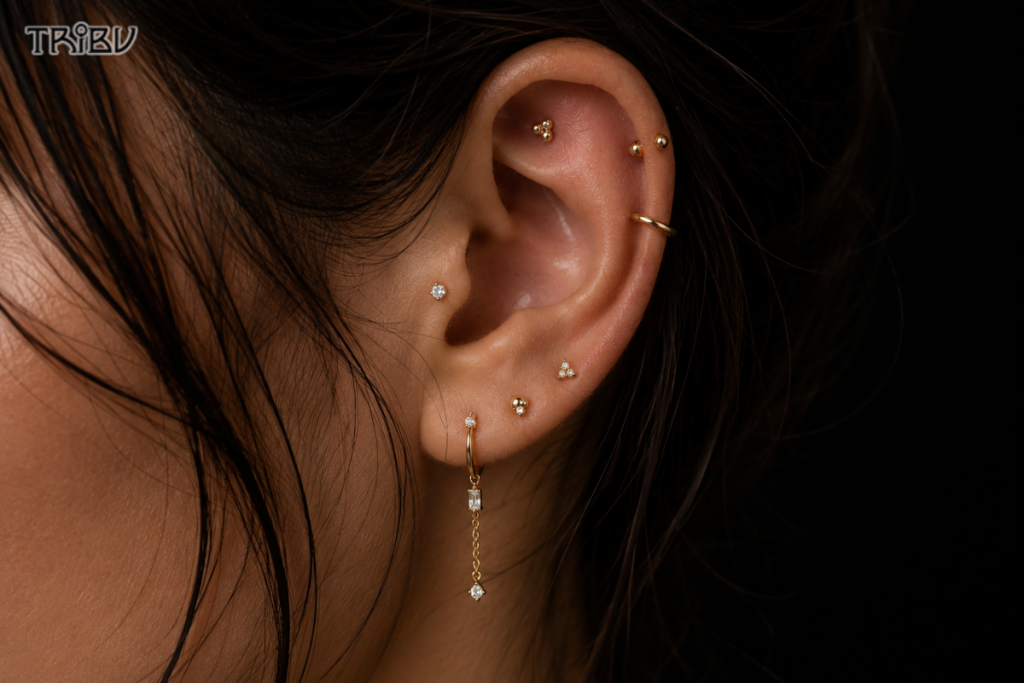
The Role of Anatomy in Selection
Every individual body is shaped differently. A placement that looks beautiful on one person may not be physically viable on another. This is why professional guidance is a necessary part of the process.
During your consultation, a professional piercer will evaluate:
- Tissue Thickness: Cartilage and skin must have sufficient thickness to support the jewelry without placing stress on the surrounding area.
- Movement and Flexibility: Areas that bend or stretch constantly (such as the neck or wrists) require specific jewelry styles to prevent rejection.
- Blood Flow and Nerve Paths: Avoidance of major blood vessels is essential for safety and clean healing. Piercers often use transillumination (shining a light through the tissue) to verify safe pathways.
- Proportion and Balance: The placement should complement your natural features and existing jewelry, maintaining a cohesive aesthetic.
If you want to discuss your options with an experienced piercer, you can contact us to schedule a consultation.
Selecting Your Jewelry Materials
The material of your jewelry is just as critical as the placement itself. Poor-quality metals can cause allergic reactions, prolong healing times, or lead to migration.
When selecting your pieces, consider these safe options:
- Implant-Grade Titanium (ASTM F-136): This is the gold standard for initial piercings. It is lightweight, highly durable, and completely nickel-free.
- Solid 14k or 18k Gold: Perfect for those who prefer a classic look. Verify it is yellow, white, or rose gold free of harmful alloys like nickel or cadmium.
- Niobium: A highly biocompatible elemental metal that is slightly heavier than titanium and can be anodized to various dark colors.
Choosing professional piercing jewelry is a major step in avoiding irritation and promoting long-term healing. Our team can guide you through selecting the perfect material and aesthetic style for your chosen placement.
Safe Aftercare Practices
Proper aftercare is the foundation of a successful piercing. Because many unique placements are located in areas prone to movement or friction, consistent care is necessary.
Follow these steps to support your healing process:
- Clean Twice Daily: Use a sterile saline spray (0.9% sodium chloride) to gently clean the area. Avoid mixing your own salt solution, as incorrect ratios can dry out the tissue.
- Dry Gently: After cleaning, pat the area dry with a clean, disposable paper towel. Do not use cloth towels, as they can harbor bacteria and snag on the jewelry.
- Leave It Alone: Do not twist, turn, or slide the jewelry. Moving the jewelry tears the delicate new skin cells forming inside the channel.
- Avoid Sleeping on It: Sleeping directly on a healing ear piercing can cause the angle of the piercing to shift. Use a travel pillow with a hole in the center to keep pressure off your ear.
- Keep Hair and Makeup Away: Hair products, cosmetics, and perfumes can cause severe irritation and chemical burns on fresh wounds.
To find a location near you, feel free to contact us and speak with our welcoming staff.
Frequently Asked Questions
For answers to common queries regarding healing and safety, you can view our FAQ page.
What is the most painful underrated piercing?
Pain is highly subjective, but placements through thick cartilage, such as the snug or the anti-tragus, generally rank higher on the pain scale compared to lip or dermal placements. The sensation is typically a quick, sharp pinch followed by a dull warmth.
How do I know if my anatomy is suitable for a specific placement?
The only reliable way to assess your anatomy is through an in-person consultation with a trained professional. They will physically examine the area, checking the thickness of the tissue, the shape of the cartilage folds, and the movement of the skin to make sure the jewelry can sit safely.
What should I do if my piercing shows signs of irritation?
If you notice redness, swelling, or a small bump near the entry point, do not panic or remove the jewelry. Often, irritation is caused by accidental bumping, sleeping on the piercing, or improper cleaning. Keep up with your sterile saline rinses and contact a professional piercer to evaluate the area.
Can I change my jewelry during the healing phase?
You should not change your jewelry during the initial healing phase unless instructed by your piercer. The only exception is a “downsize,” where your piercer replaces the initial longer post with a shorter one once the swelling has subsided. This is usually done around 4 to 8 weeks to prevent the jewelry from snagging.
Ready to find your next unique addition? Visit us at Tribu Piercings for a personalized, unhurried experience guided by our professional team. Let us help you select the perfect placement and high-quality jewelry to tell your story safely and beautifully.