


Deciding to get your initial body modification is a significant milestone. Understanding your first piercing meaning can provide deep insights into your personal values, style preferences, and character traits. At Tribu Piercings, we believe that every adornment tells a unique story, connecting ancient traditions with modern self-expression. Your choice of placement is rarely accidental; it reflects how you present yourself to the society around you. Whether you chose a simple earlobe stud as a child or a bold septum ring as an adult, this initial step into body modification signals how you view your body as a canvas for self-determination.
Key Takeaways
- Identity Marker: Your first piercing placement serves as an introduction to your personal identity and values.
- Traditional vs. Modern: Standard lobe piercings reflect a respect for classic aesthetics, while cartilage and facial placements suggest a desire for creative distinction.
- Quality Matters: Selecting biocompatible materials and professional care supports a safe, comfortable healing process.
- Self-Care Discipline: Diligent aftercare is a direct reflection of personal responsibility and self-respect.
The Historical and Cultural Context of Body Adornment
Before looking into individual psychology, it is essential to recognize that body modification is one of humanity’s oldest forms of expression. Across various civilizations, piercings have marked transitions, social status, and tribal belonging.
- Rites of Passage: In many traditional societies, receiving an initial piercing marked the transition from childhood to adulthood. It was a shared community event, symbolizing readiness for new responsibilities.
- Status and Wealth: In ancient Egypt and Rome, specific placements signified nobility, courage, or military success.
- Spiritual Connection: Certain cultures utilized piercings to ward off negative energies or to align the body’s natural energy centers.
By participating in this practice today, you are not merely following a contemporary trend. You are participating in a rich, global heritage that values the body as a sacred medium for personal narrative.
The Psychology Behind Your Initial Piercing Selection
Psychologists and sociologists suggest that body modifications are closely linked to self-perception and personal autonomy. Your initial choice of placement reveals how you balance personal desires with social expectations.
- Conformity versus Distinction: A placement that is easily hidden, such as the earlobe, suggests a harmonious balance with social norms. Conversely, highly visible placements indicate a preference for immediate distinction and individuality.
- Pain Tolerance and Courage: Choosing a more sensitive area, such as the cartilage or nose, indicates a willingness to endure discomfort for the sake of your personal aesthetic goals. This reveals resilience and determination.
- Control and Autonomy: For many individuals, getting their first modification is an act of reclaiming control over their physical form. It is a declaration of ownership, stating that you alone decide how your body looks.
Decoding Different Piercing Personality Types
To understand the connection between body jewelry and character, we can examine distinct piercing personality types. While every individual is unique, certain placements consistently align with specific temperaments and lifestyle choices.
- The Classic Traditionalist: Typically selects standard lobe placements. This person values heritage, simplicity, and timeless style.
- The Subtle Rebel: Prefers helix or outer cartilage placements. This individual seeks distinction without wanting constant public attention.
- The Creative Expresser: Selects nostril or septum placements. They use their face as a canvas for identity and cultural connection.
- The Modern Curator: Chooses complex inner-ear locations like the conch, rook, or tragus. This type focuses on detail, anatomy-specific design, and symmetry.
Analyzing Specific Placements and Their Meanings
Let us examine closely what individual placements reveal about your inner self and how they reflect your personal narrative.
The Standard Lobe: Respect for Tradition
The lobe is the most common entry point for jewelry wearers. If this was your initial choice, you likely appreciate stability, balance, and classic aesthetics.
- Key Traits: Practical, family-oriented, organized, and respectful of social customs.
- Style Preference: Simple studs, classic hoops, and versatile designs that transition easily from professional settings to social gatherings.
- Cultural Connection: This choice often connects to family rites of passage, representing a shared heritage across generations. You value the comfort of tradition and prefer to build your style on a solid, time-tested foundation.
The Helix: The Gateway to Individuality
Choosing the outer cartilage of the ear as your initial placement shows a willingness to step outside the standard path. You desire to stand out, but you prefer to do so on your own terms.
- Key Traits: Independent, thoughtful, observant, and subtly non-conforming.
- Style Preference: Delicate rings, textured studs, and minimalist bars.
- Context: You do not feel the need to shout your individuality; instead, you let it show through subtle, elegant details. If you want to discuss options for this placement, you can contact us to speak with an experienced professional who understands cartilage anatomy.
The Nostril or Septum: Bold and Communicative
Facial jewelry is immediately visible, making it a powerful statement of identity. Choosing a nose piercing first indicates that you are comfortable being noticed and value open communication.
- Key Traits: Expressive, artistic, confident, and highly communicative.
- Style Preference: Bold clickers, delicate gold hoops, or gemstone studs that draw attention to your facial features.
- Symbolism: Nose jewelry has deep historical roots in various global cultures, often symbolizing status, strength, and beauty. By placing jewelry on your face, you invite others to see your true self immediately, showcasing an open and honest approach to social interactions.
The Tragus or Conch: The Detail-Oriented Curator
Selecting an inner-ear placement for your initial experience is rare and shows a high level of intentionality. You do not merely follow trends; you study anatomy and design.
- Key Traits: Analytical, precise, design-focused, and patient.
- Style Preference: Flat-back labrets with intricate gold designs, or custom-fit hoops that match your ear shape perfectly.
- Experience: Because these areas require careful attention during recovery, choosing them first shows that you are responsible and prepared for diligent aftercare. You appreciate the beauty of complex, architectural layouts and enjoy curating a unique collection of jewelry.
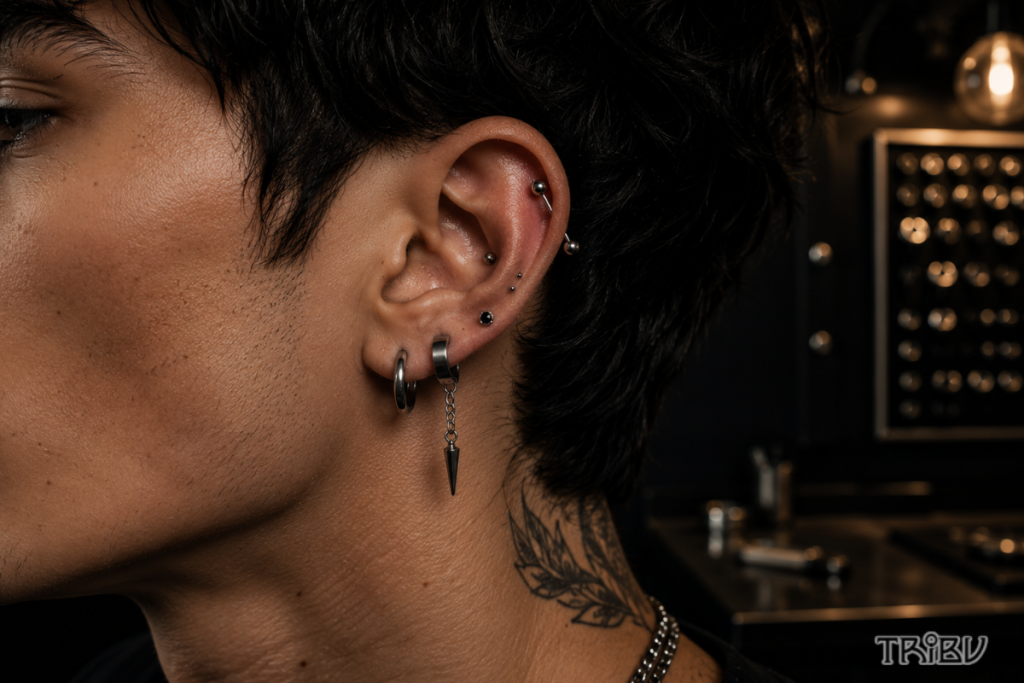
Comparing Piercing Placements and Personality Traits
To help you visualize these differences, the table below compares the primary placements, their typical personality alignments, and recommended jewelry styles.
Placement | Personality Alignment | Primary Trait | Recommended Jewelry | Healing Difficulty |
Standard Lobe | The Classic Traditionalist | Practicality | Gold studs, simple hoops | Low |
Helix | The Subtle Rebel | Independence | Textured rings, flat-back studs | Medium |
Nostril / Septum | The Creative Expresser | Expressiveness | Nostril screws, septum clickers | Medium |
Tragus / Conch | The Modern Curator | Precision | Threadless gold ends, custom rings | High |
The Importance of Professional Care and Placement
Regardless of your specific piercing personality types, the experience of getting your first piece of jewelry should be safe, transparent, and respectful. Your body deserves high-quality materials and sterile procedures.
When you visit our store locations, our professional piercers focus on your unique anatomy. We explain every step of the process, opening sterile tools directly in front of you to make certain you feel comfortable and informed. We believe that the process of receiving a piercing is just as important as the jewelry itself, and we strive to provide a calm, unhurried environment for every client.
Selecting the Right Metal for Your First Experience
Your body’s response to jewelry depends heavily on the material used. For a successful healing process, we recommend the following implant-grade options:
- Implant-Grade Titanium (Ti-6Al-4V ELI): Highly biocompatible, nickel-free, and ideal for sensitive skin. It is the industry standard for safe healing.
- 14k or 18k Solid Gold: Biocompatible and classic, offering long-lasting beauty without degrading over time. Avoid gold-plated metals, which can wear off and cause irritation.
- Niobium: A pure element that is highly resistant to corrosion and completely hypoallergenic, making it excellent for individuals with metal sensitivities.
To learn more about healing times, jewelry options, and safe materials, you can read our detailed FAQ page.
Caring for Your New Piercing: A Reflection of Self-Respect
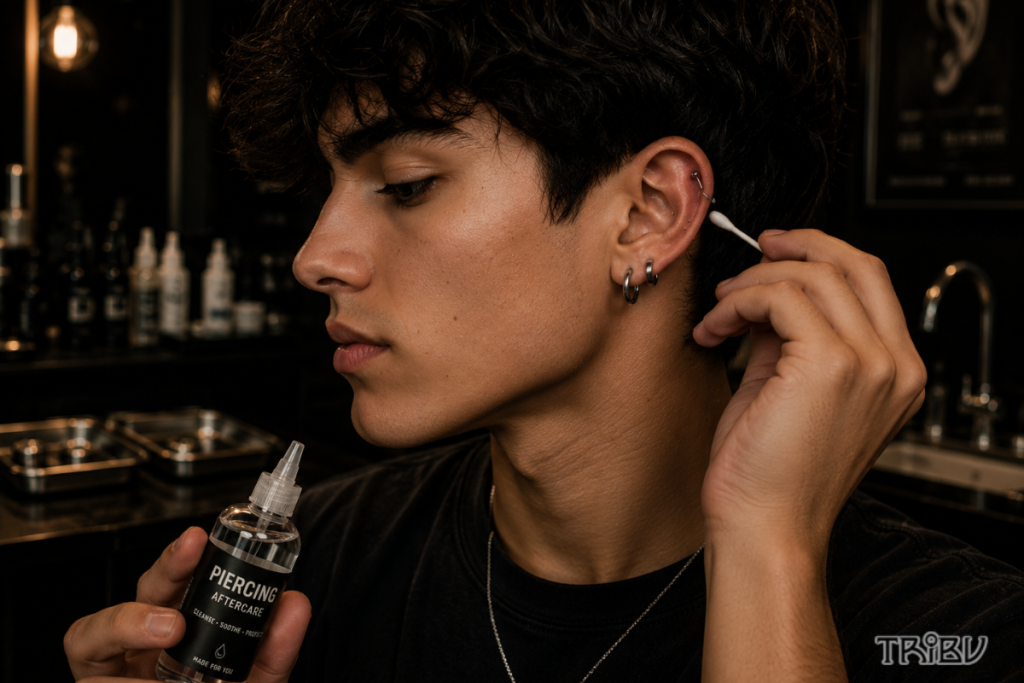
The journey does not end when you leave the studio. In fact, the healing phase is where your commitment to self-care is truly tested. Proper aftercare is a direct reflection of self-respect and discipline.
- Cleaning Routine: Use a sterile saline spray twice daily. Avoid harsh chemicals, alcohol, or home remedies, which can delay healing and cause tissue damage.
- Hands-Off Policy: Do not twist, turn, or play with the jewelry. Touching a healing wound introduces bacteria and increases the risk of infection.
- Patience and Health: Cartilage and facial piercings can take several months to fully heal. Maintaining a healthy lifestyle, staying hydrated, and getting adequate rest will support your body’s natural recovery processes.
Conclusion
Your first piercing meaning is a personal reflection of your journey, values, and style. Whether you chose a classic lobe stud or a bold septum ring, your decision highlights a specific aspect of your personality. By selecting high-quality jewelry and trusting experienced professionals, you make certain that your self-expression remains safe, beautiful, and meaningful. Your body is a reflection of your story; choose to tell it with intention, care, and respect.
Frequently Asked Questions
What does a nose piercing say about your personality?
A nose piercing typically suggests an expressive, creative, and confident character. It shows that you are comfortable with high-visibility self-expression and appreciate cultural symbolism.
Is getting a cartilage piercing as a first piercing common?
While less common than a lobe piercing, many individuals choose a helix or other cartilage piercing first. This choice often indicates an independent nature and a desire for subtle distinction.
How do I know which placement matches my personality best?
Consider your daily routine, professional environment, and personal style. If you prefer classic, low-maintenance options, the lobe is ideal. If you enjoy unique curations and detailed designs, inner-ear cartilage placements may suit you best.
Why does the material of my first jewelry piece matter?
Using implant-grade materials like titanium or solid gold prevents allergic reactions and supports a clean, efficient healing process. Lower-quality metals can cause irritation, prolonging recovery.
Ready to begin your self-expression journey? Visit Tribu Piercings today to find your perfect piece.